
ConnectorX
SKU 00001
Overview
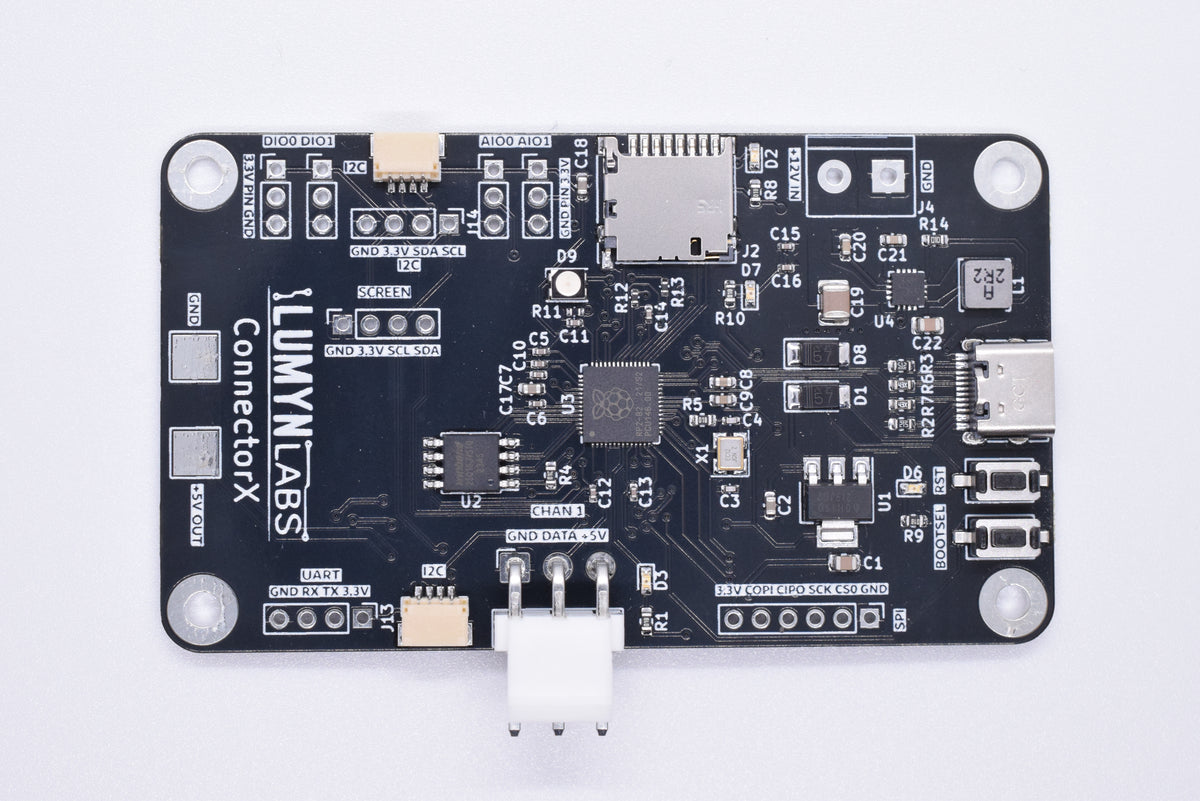
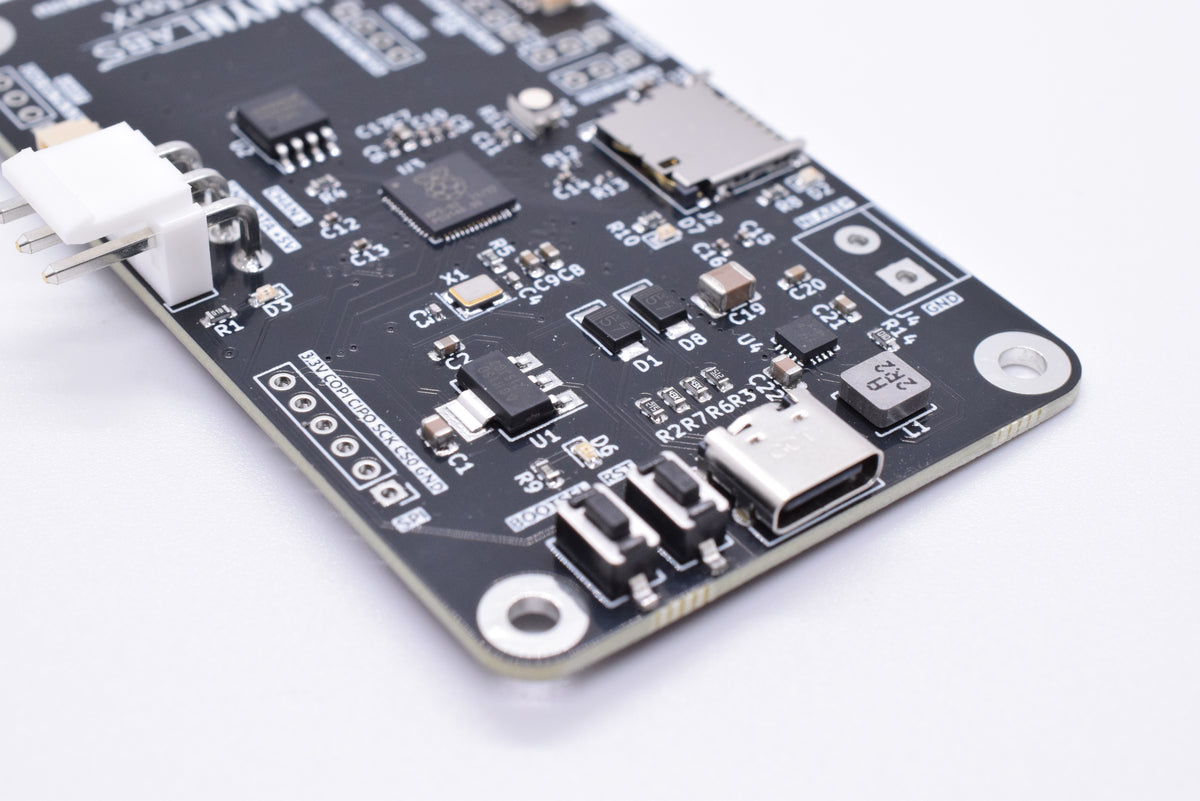
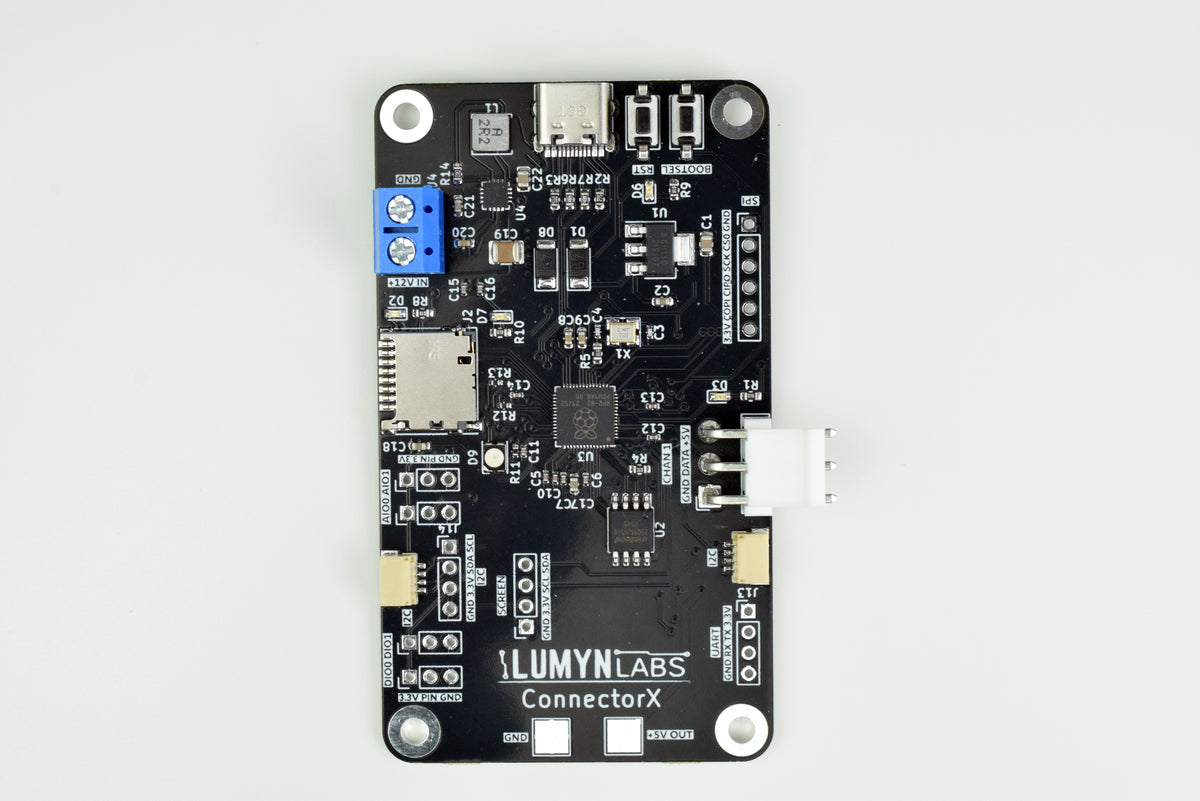
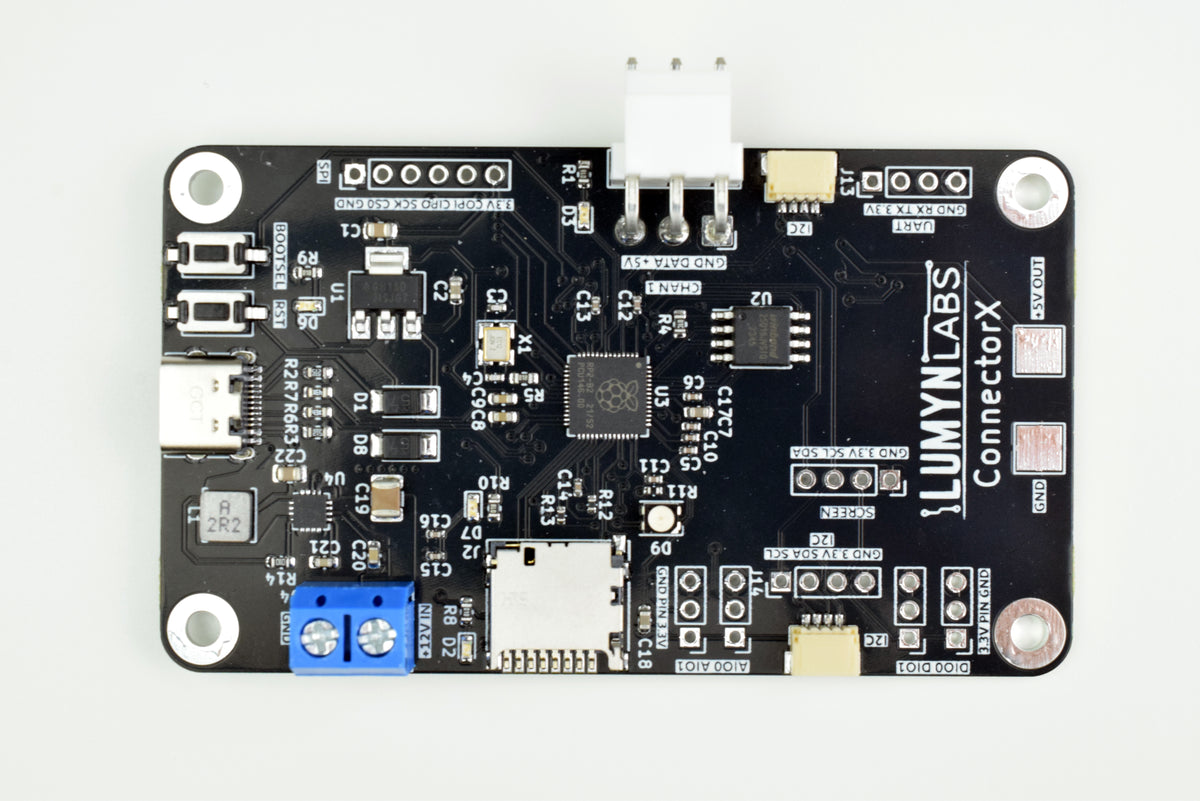
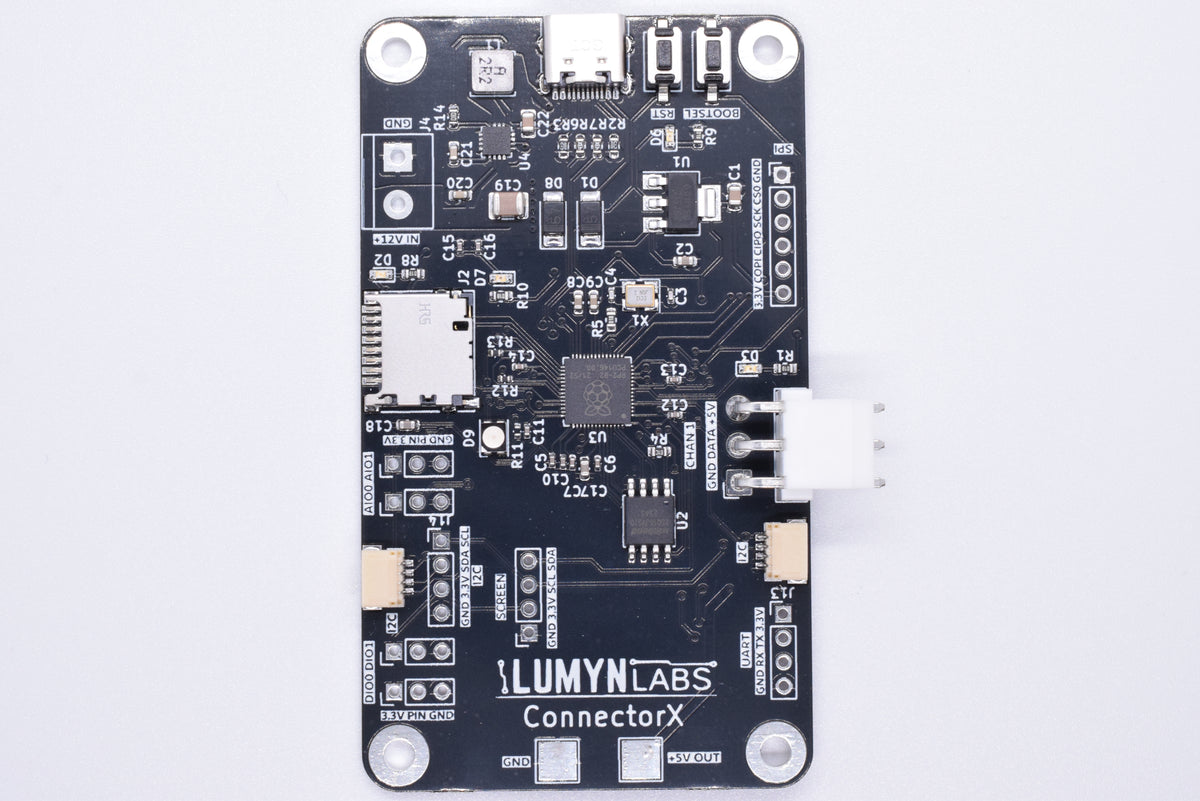
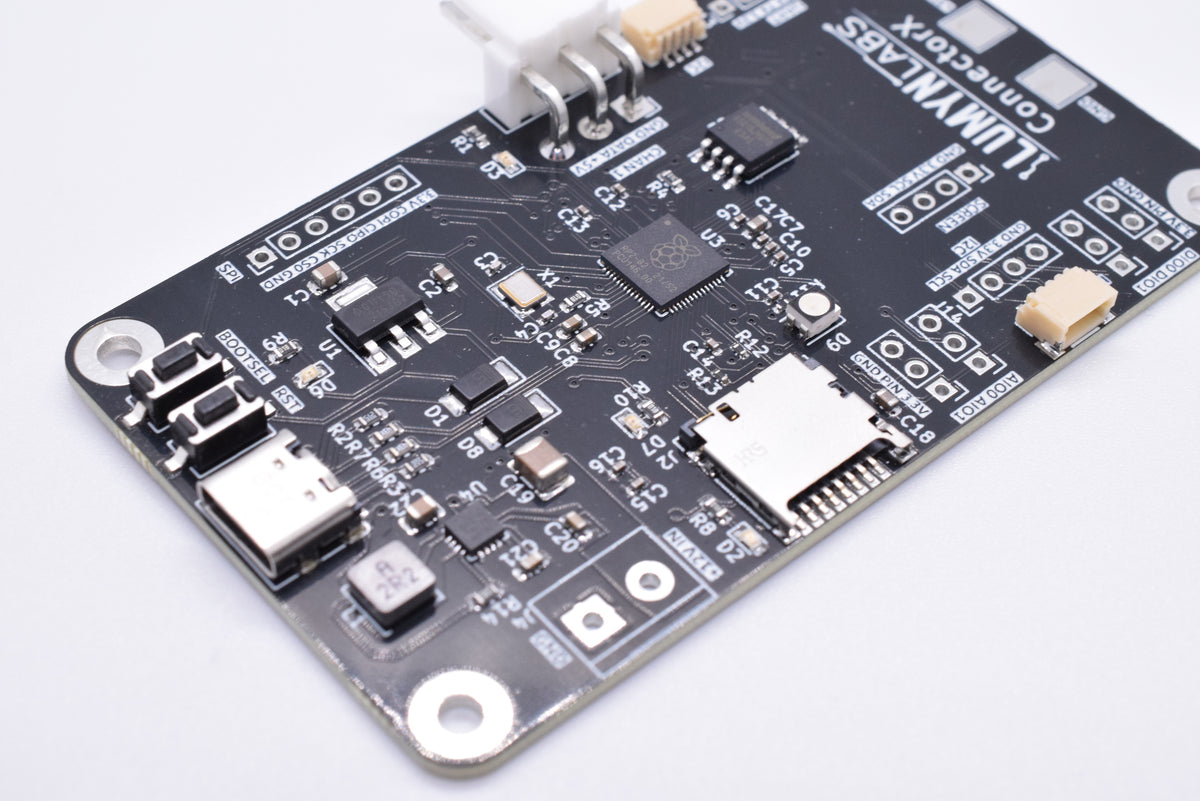
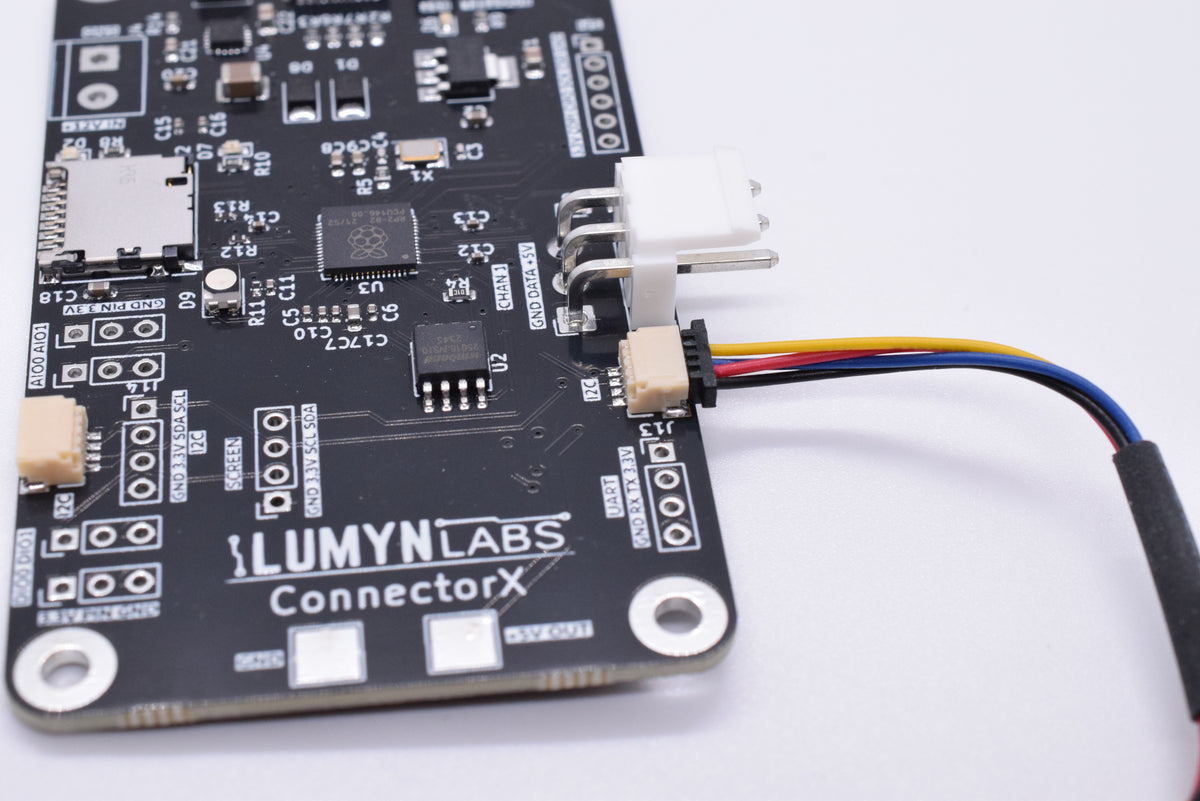
Connect Anything with ConnectorX! Engineered with the First Robotics Competition (FRC) in-mind, ConnectorX brings together advanced LED control, flexible sensor integration, and robust power management in a single, easy-to-use breakout board.
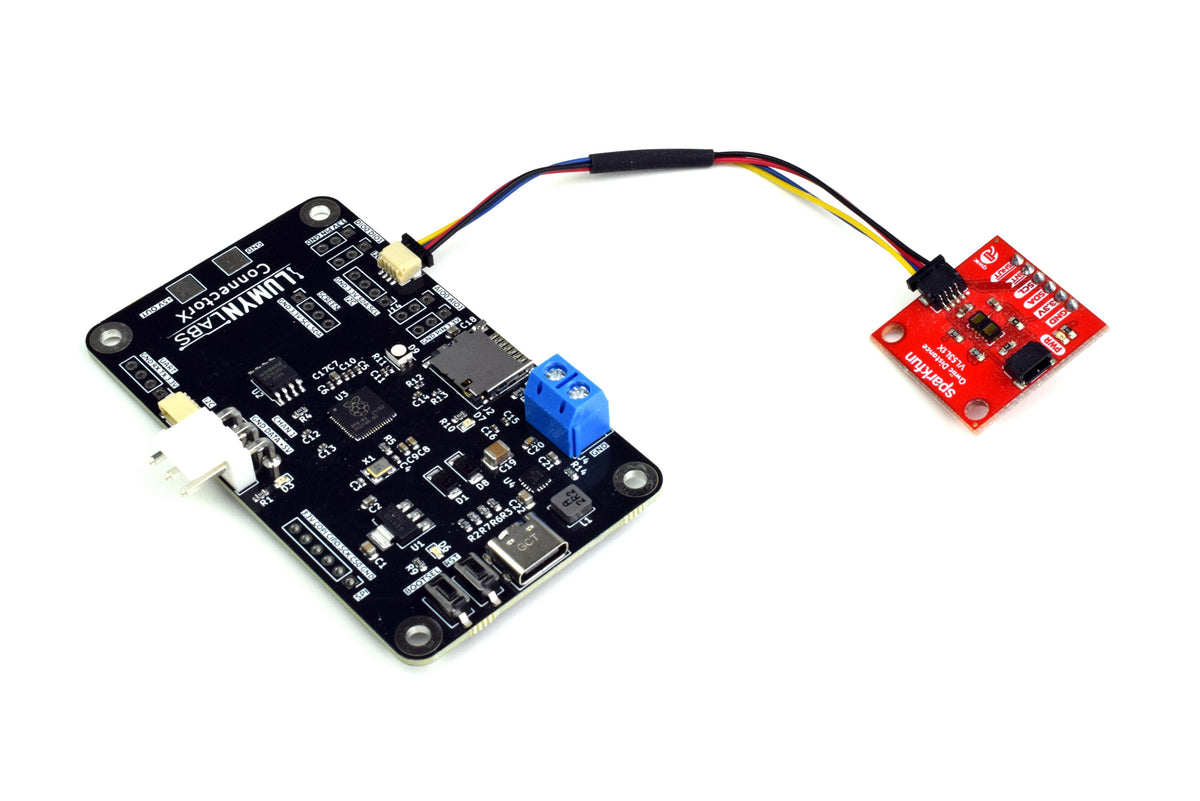
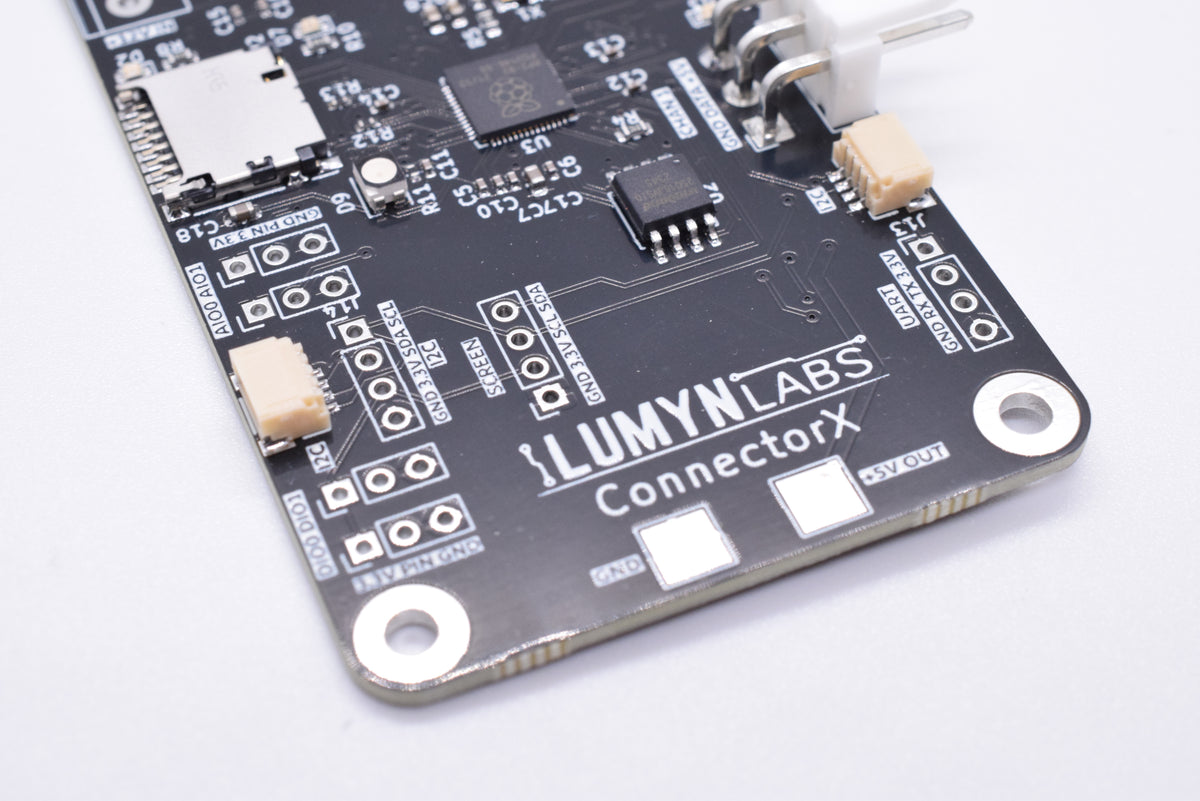
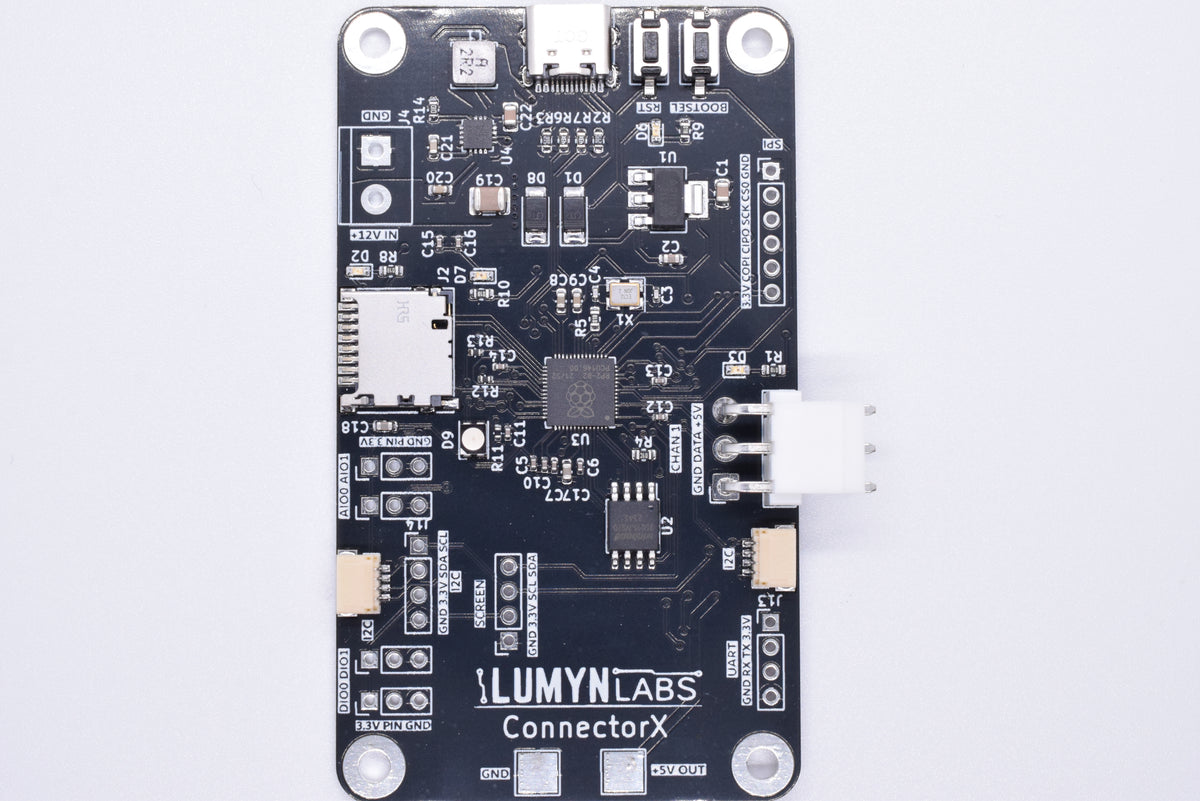
- 2x QWIIC/STEMMA QT (JST-SH 1mm pitch) I2C headers
- 1x I2C 0.1" header
- 1x UART 0.1" header
- 1x SPI 0.1" header
- 2x Digital in/out headers
- 2x Analog in/out headers
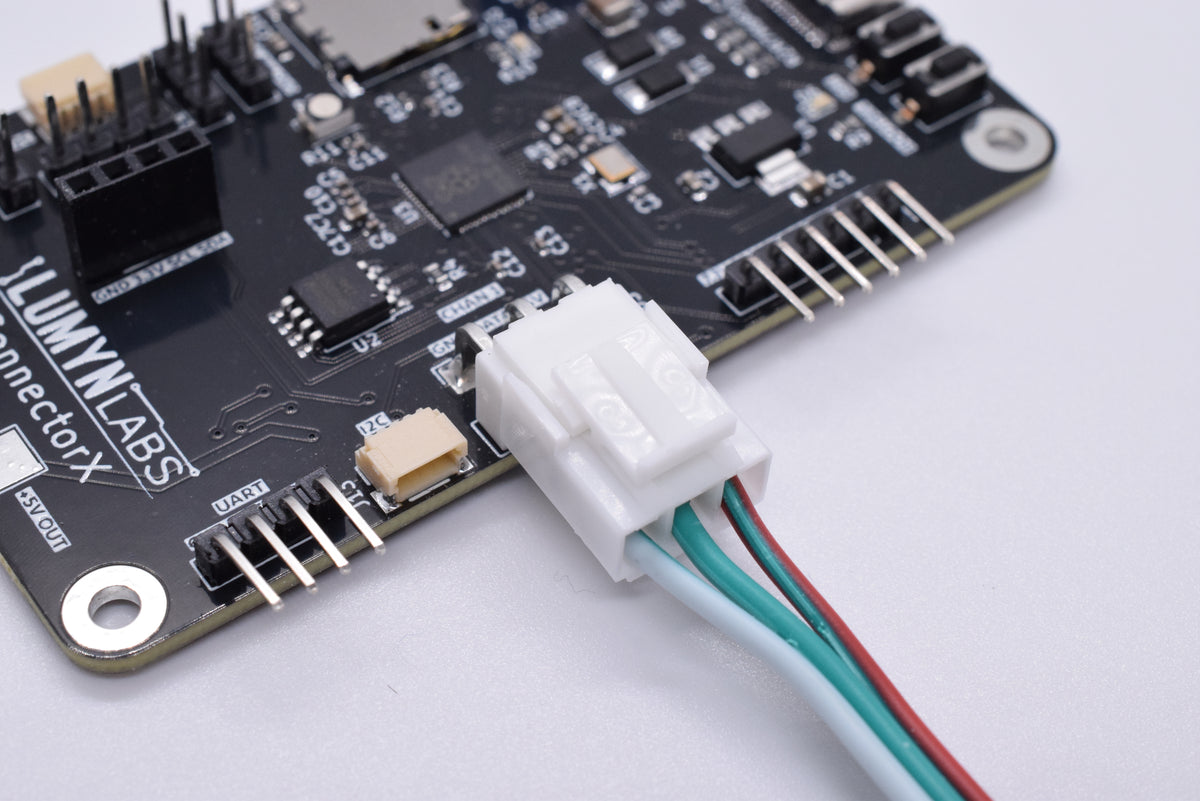
- 1 LED channel
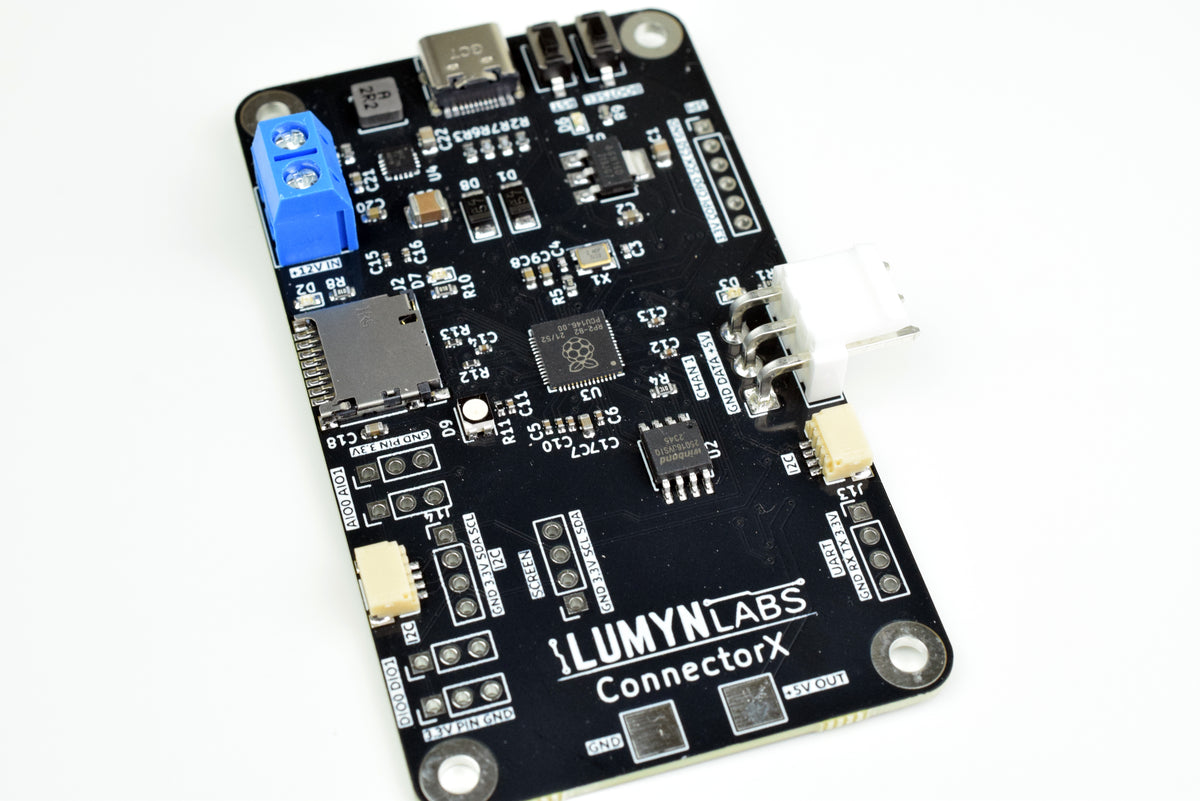
- 6-16V input to 5V @3A output
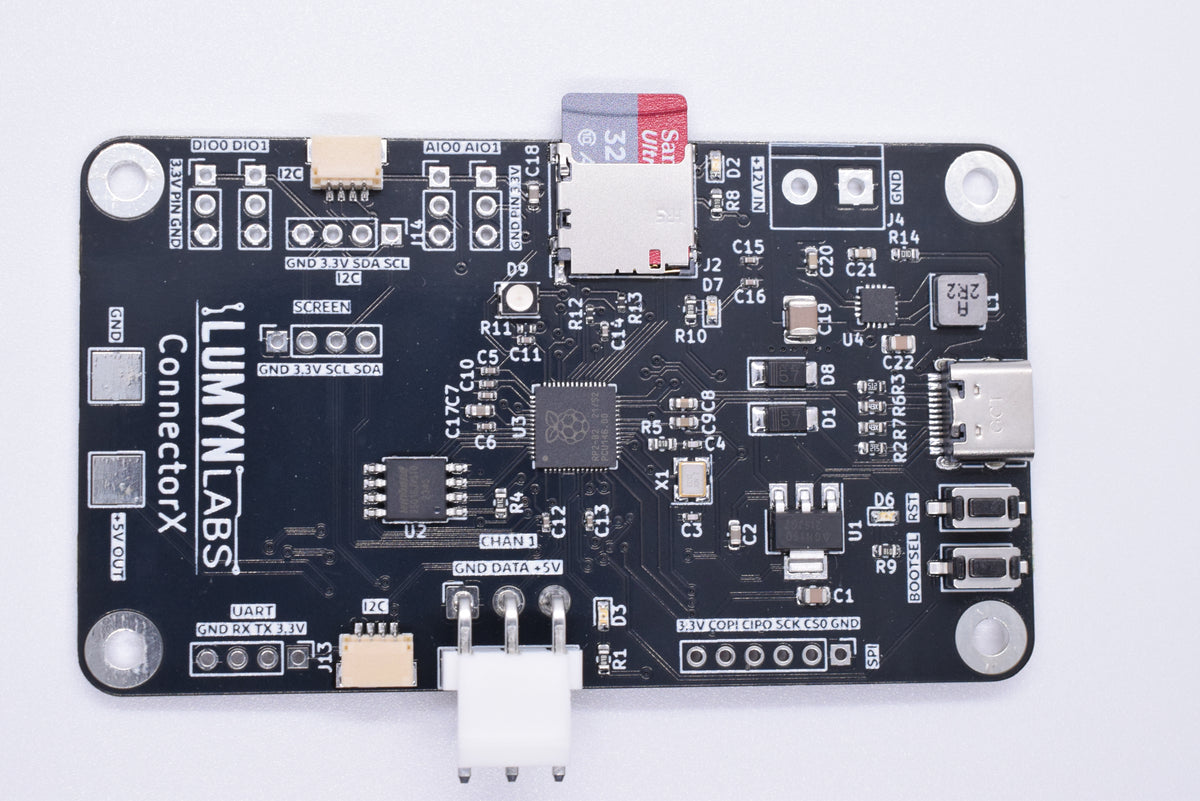
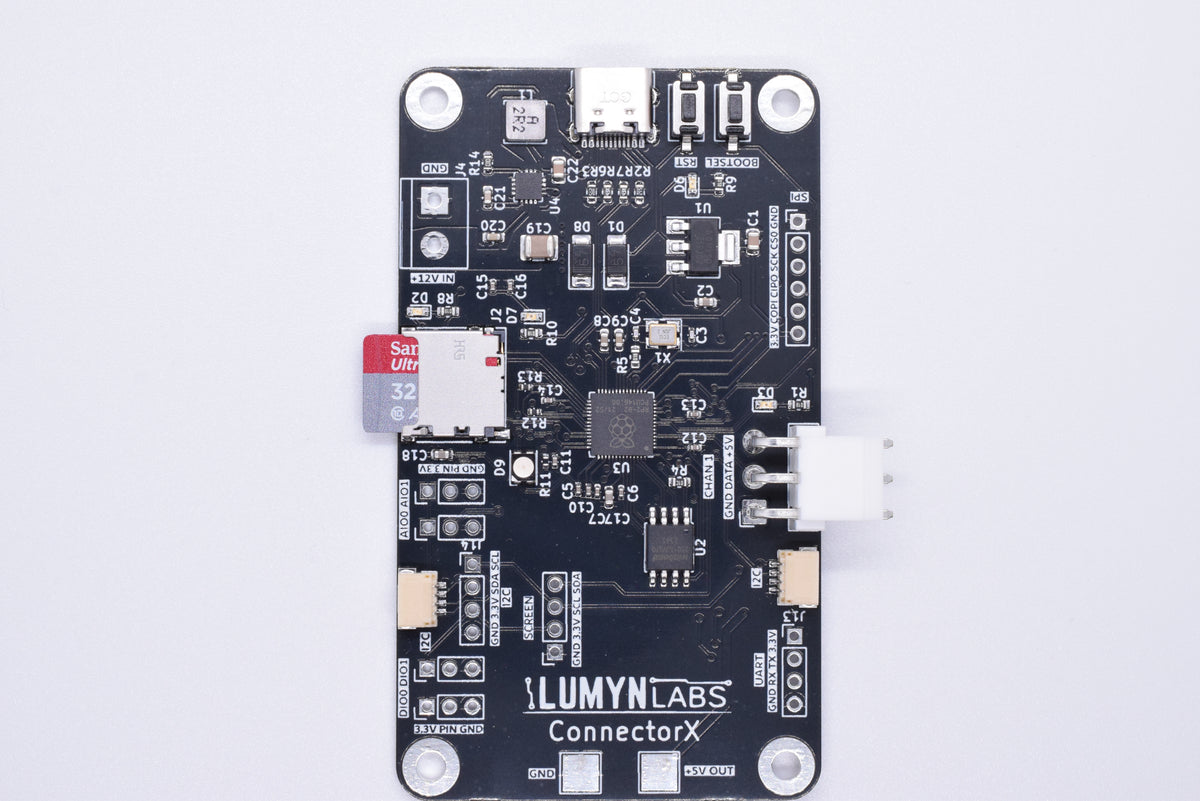
- SD card slot
- Screen connector
One board for LEDs and I/O
WS2812B plus module buses
One LED channel for up to 320 WS2812B LEDs, with I2C, SPI, UART, DIO, and analog for distance sensors, limit switches, and custom peripherals.
USB or UART host connection
Connect over USB for Lumyn Studio and SDKs, or use UART with a configurable baud rate when your project needs serial.
Lumyn Studio setup
Configure zones, modules, and animation sequences in the browser. Use LED Commander to test your strip or matrix animations before calling the API from your project.
26 firmware animations
Chase, Fire, Plasma, Confetti, and 22 more animations make it easy to add lighting effects without writing any code. Chain steps into sequences, then call them by zone name from the API.
WPILib vendordep
Install the Lumyn Labs vendordep from the WPILib menu in VS Code. Load your Studio configuration, register modules, and drive LEDs with the same zone IDs you defined in Studio.
DirectLED and custom firmware
Push per-pixel buffers from the API when prebuilt animations are not enough. ConnectorX also supports a custom firmware path for teams that want to own the animation stack.
Modules on the same controller
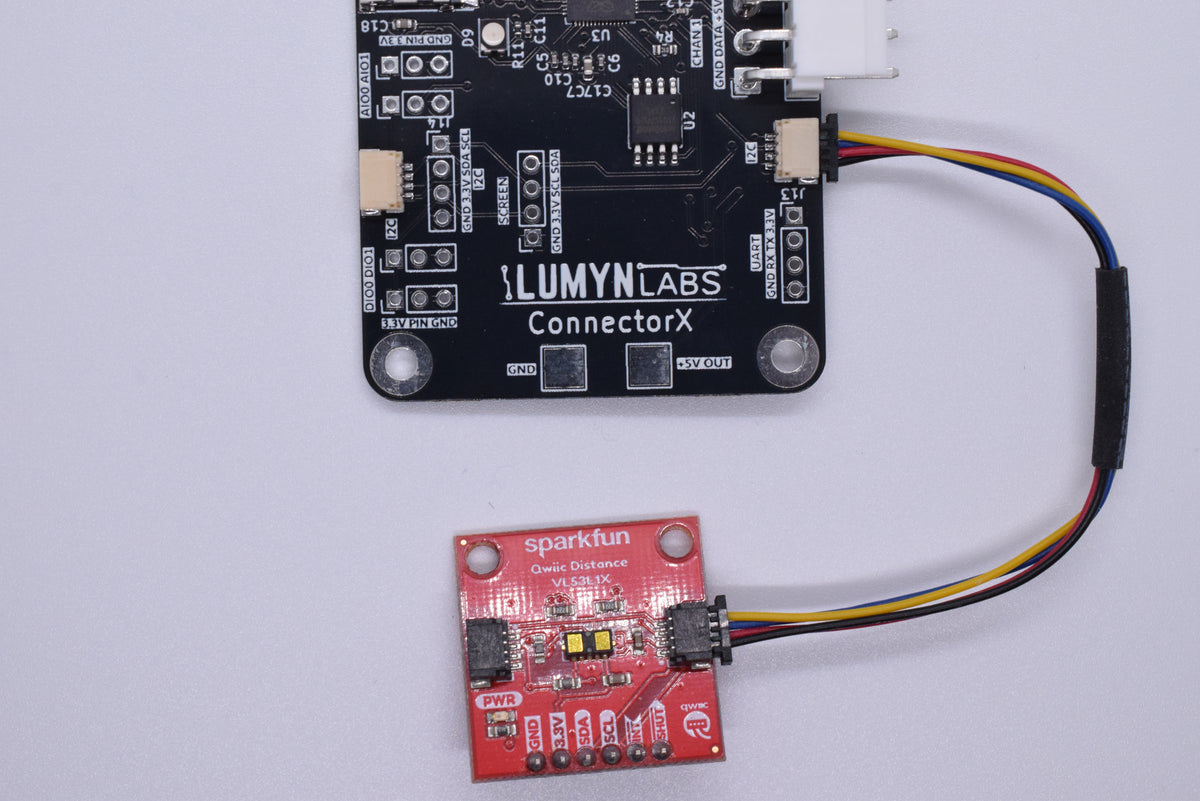
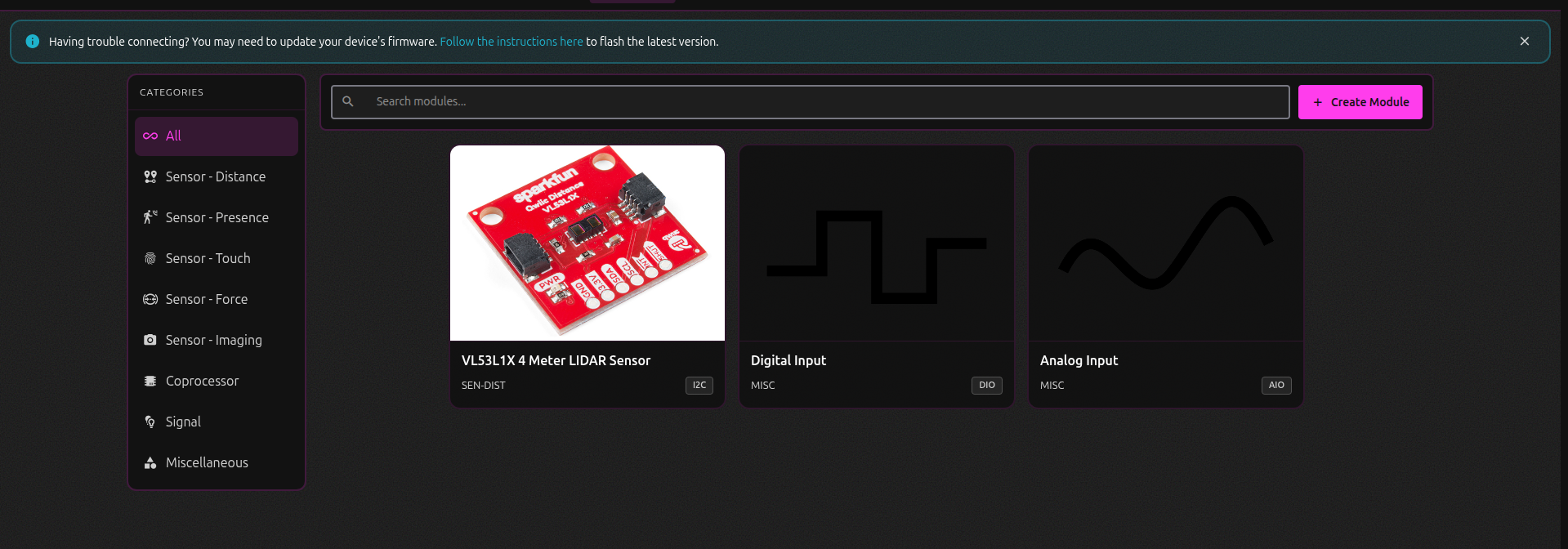
Register modules in Studio with IDs that match your API calls. Built-in support includes VL53L1X time-of-flight distance, digital inputs, and analog inputs. SPI and UART buses are available for custom peripherals.
Module callbacks and LED commands use the same configuration file from Studio.
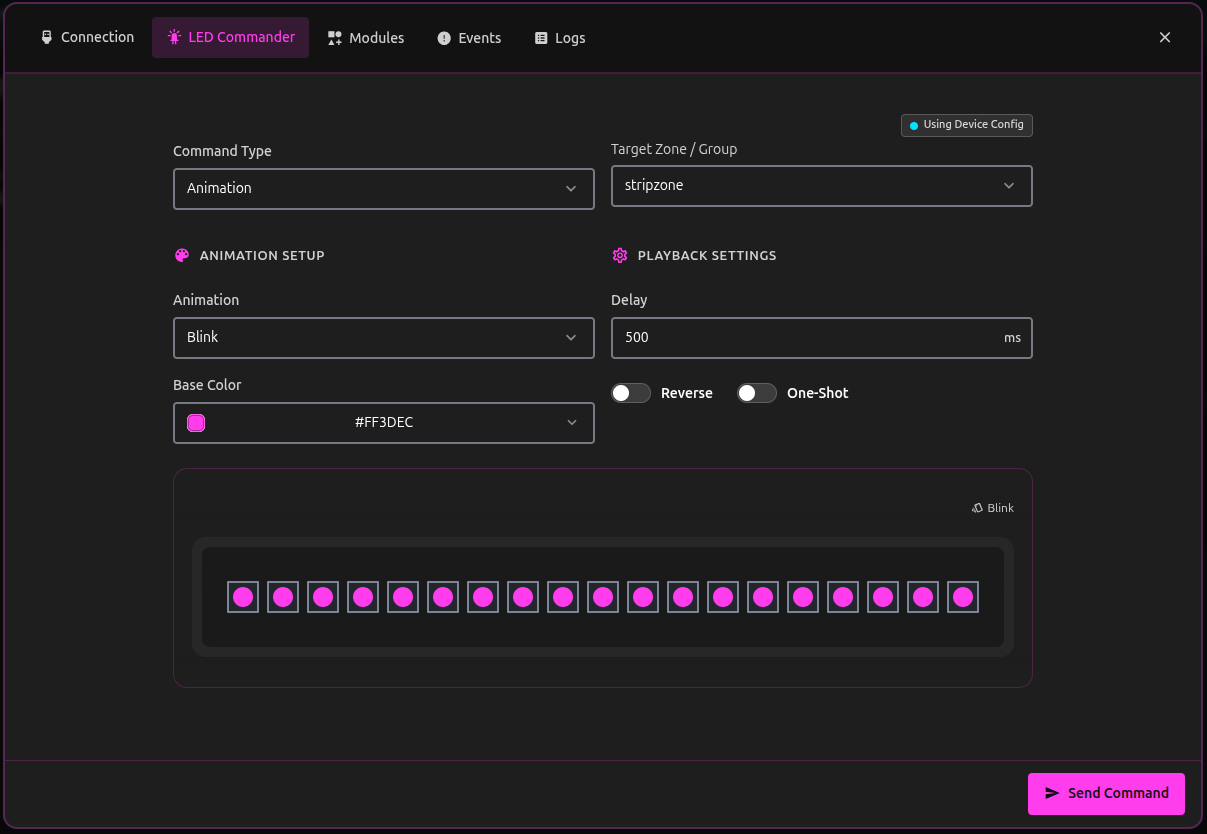
Studio before code
Connect power and USB, open Lumyn Studio, and read the live device configuration. LED Commander fills in command types from that config so you can test strip and matrix animations before calling the API from your project.
Specifications
- LED channels 1 channel
- Max LEDs 320 per channel
- Regulator output 3,000 mA (5 V to LEDs)
- LED protocol WS2812B addressable
- Module buses I2C, SPI, UART, DIO, and analog
- Host connection USB and UART
- Configuration storage microSD (FAT32)
- Configurator Lumyn Studio (Chrome or Edge)
- API WPILib Java and C++ vendordep; Python, C, and C++ SDKs for off-robot hosts
Common questions
ConnectorX or Animate?
Choose ConnectorX when you need one LED channel plus module buses for sensors and custom peripherals. Choose ConnectorX Animate when the project needs four LED channels or a larger LED count.
Power
USB-C is enough for Lumyn Studio setup. For LED output, supply 12 V to the board. The onboard regulator supplies 5 V to connected WS2812B hardware.
microSD card
A FAT32 microSD card is required. ConnectorX reads config.json from the card at boot, so the board will not boot without one. Use Lumyn Studio to export the configuration, then copy it to the card root.
Modules
Built-in firmware support includes VL53L1X distance sensors over I2C, digital inputs, and analog inputs. SPI and UART are available for custom module work. Register modules in Studio with IDs that match your API calls.